Taiwan: The Unseen Tensions Shaping US-China Relations
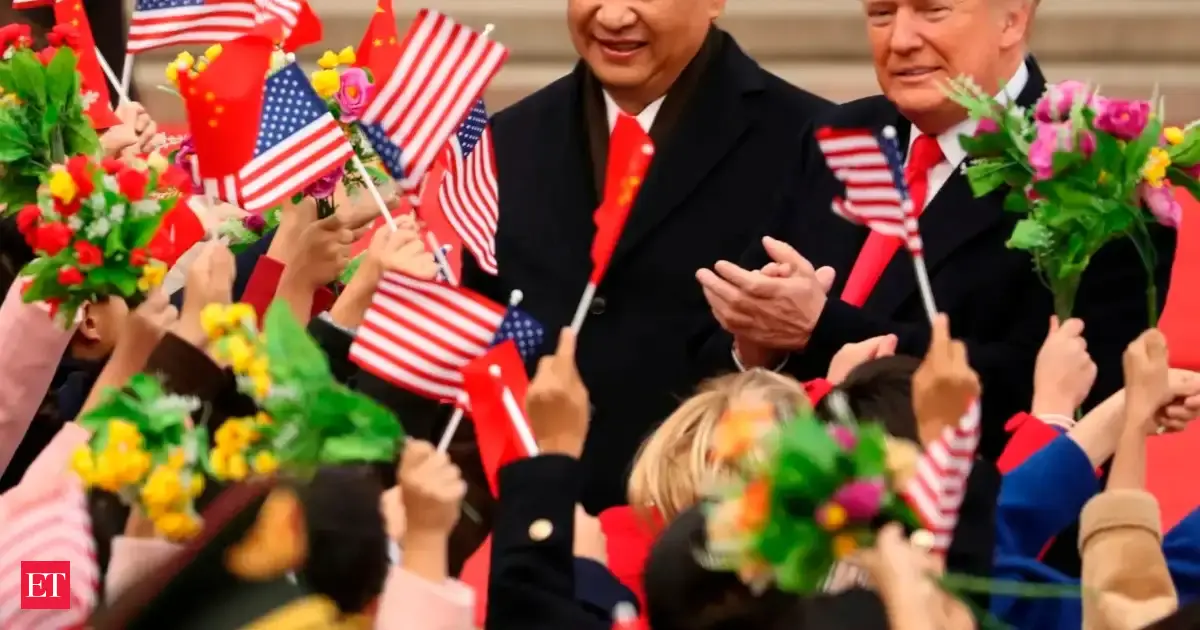
Taiwan remains a pivotal issue in the geopolitics between the US and China, influencing diplomatic strategies and military postures. As tensions rise, understanding Taiwan's role is crucial for comprehending the broader implications for international relations.
Introduction
In the complex web of international relations, Taiwan stands out as a critical flashpoint between two global superpowers: the United States and China. The island, often referred to as the 'elephant in the room,' has become a focal point of contention, shaping diplomatic strategies, military postures, and economic ties in the Asia-Pacific region.
The Historical Context
To understand the current dynamics, one must delve into Taiwan's historical backdrop. Following the Chinese Civil War in 1949, the Nationalist government retreated to Taiwan, leading to a longstanding divide between the People's Republic of China (PRC) and the Republic of China (ROC). While the PRC views Taiwan as a breakaway province, Taiwan operates as a de facto independent state with its own government, economy, and democratic institutions.
US-Taiwan Relations
The United States has historically maintained a delicate balance in its relations with Taiwan. The Taiwan Relations Act of 1979 established a framework for US support, ensuring that Taiwan has the means to defend itself against potential aggression from China. This commitment has been tested in recent years as China has ramped up military activities in the Taiwan Strait, prompting the US to enhance its military presence in the region.
China's Assertive Stance
China's growing assertiveness regarding Taiwan has raised alarms not only in Taipei but also in Washington. The PRC has increased military drills around Taiwan, including live-fire exercises and incursions into Taiwan's air defense identification zone (ADIZ). These actions are seen as a direct challenge to Taiwan's sovereignty and a demonstration of China's willingness to use force if necessary to achieve reunification.
The Global Implications
The Taiwan issue extends beyond bilateral relations; it has significant implications for global stability. As the US and China vie for influence in the Asia-Pacific, Taiwan's fate could determine the future of international order. A conflict over Taiwan could disrupt global supply chains, particularly in the semiconductor industry, where Taiwan is a key player. The repercussions would be felt worldwide, affecting economies and security arrangements far beyond the region.
International Reactions
Countries around the world are closely monitoring the situation. Allies of the US, including Japan and Australia, have expressed concern over China's aggressive posture towards Taiwan. In response, they have sought to strengthen their own defense capabilities and deepen security cooperation with the US. This evolving landscape underscores the interconnectedness of global security and the potential for Taiwan to become a catalyst for broader geopolitical shifts.
The Role of Public Sentiment
Within Taiwan, public sentiment is increasingly leaning towards a distinct Taiwanese identity, separate from China. Polls indicate that a majority of Taiwanese citizens favor maintaining the status quo of de facto independence, with many rejecting the notion of unification under Beijing's terms. This growing sense of identity complicates the narrative for both the US and China, as they navigate their respective strategies regarding Taiwan.
Conclusion
As Taiwan continues to be the focal point of US-China tensions, its significance in international relations cannot be overstated. The island's future will likely shape the geopolitical landscape in the coming years, influencing not only the dynamics between the two superpowers but also the stability of the entire Asia-Pacific region. Understanding Taiwan's role is essential for grasping the complexities of modern diplomacy and the potential for conflict in a rapidly changing world.