Standard Chartered to Cut 7,800 Back-Office Jobs by 2030 Amid Automation Push
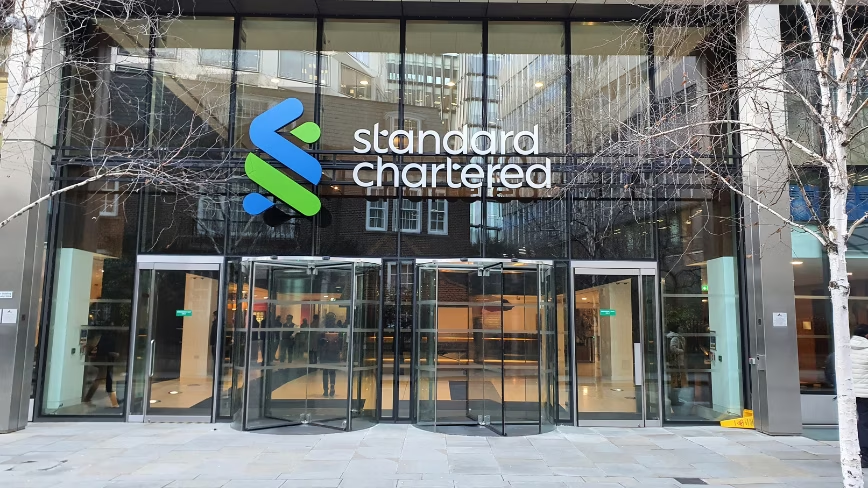
Standard Chartered Bank has announced plans to eliminate 7,800 back-office positions as part of a strategic shift towards automation and efficiency. The move is expected to significantly reshape the bank's operational landscape by 2030.
Standard Chartered's Strategic Shift Towards Automation
In a bold move reflecting the growing trend of automation in the banking sector, Standard Chartered has announced plans to cut approximately 7,800 back-office jobs by the year 2030. This decision comes as the bank seeks to streamline operations and enhance efficiency through the implementation of advanced technologies.
Rationale Behind the Job Cuts
The decision to reduce its workforce is driven by the bank's commitment to embracing digital transformation. Standard Chartered aims to leverage artificial intelligence (AI), machine learning, and robotic process automation (RPA) to handle routine tasks traditionally performed by human employees. By reallocating resources towards technology, the bank hopes to improve service delivery and reduce operational costs.
Impact on Employees and Operations
While the bank has indicated that the job cuts will primarily affect back-office roles, the implications for employees are significant. The affected positions are expected to be those involved in administrative tasks, data entry, and other functions that can be efficiently managed by machines. Standard Chartered has emphasized that it will provide support for affected employees, including retraining and redeployment opportunities, to help them transition into new roles within the organization.
Industry Trends in Banking Automation
This move by Standard Chartered is not an isolated incident but rather part of a broader trend within the banking industry. Many financial institutions are increasingly adopting automation technologies to enhance operational efficiency and meet the evolving demands of customers. As banks face pressure to reduce costs and improve service delivery, the integration of AI and automation is becoming a strategic imperative.
Future Outlook for Standard Chartered
Standard Chartered's decision to cut jobs is part of a larger strategy to position itself as a leader in the digital banking space. The bank has outlined its vision for the future, which includes investing in technology to enhance customer experience and streamline operations. By 2030, Standard Chartered aims to have a more agile and tech-driven workforce that can adapt to the rapidly changing financial landscape.
Reactions from Industry Experts
Industry experts have weighed in on the implications of Standard Chartered's announcement. Many believe that while job cuts are unfortunate, they are a necessary step towards modernization in an increasingly competitive market. Analysts suggest that the bank's focus on technology could ultimately lead to improved customer experiences and greater operational resilience.
Conclusion: Navigating the Future of Work
As Standard Chartered embarks on this transformative journey, the banking sector will be closely watching the outcomes of its automation initiatives. The balance between technological advancement and workforce management will be crucial as the industry navigates the future of work. While the transition may pose challenges, it also presents opportunities for innovation and growth in the digital age.