Panama's President Issues Strong Warning to China Following Controversial Port Ruling
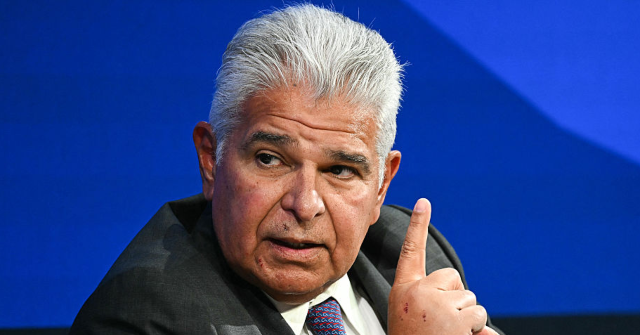
Panama's President Laurentino Cortizo has firmly rejected any threats from China regarding a recent ruling on the management of a key port. The statement comes amid rising tensions between the two nations over strategic economic interests.
Panama's President Issues Strong Warning to China Following Controversial Port Ruling
In a bold declaration, Panama's President Laurentino Cortizo has warned China against any perceived threats following a recent court ruling that has significant implications for the management of a crucial port in the Central American nation. The ruling, which has stirred controversy, has raised questions about the future of Panama's relations with China, a country that has increasingly sought to expand its influence in Latin America.
The backdrop of this tension is rooted in the decision by Panama's Supreme Court, which ruled that the contract awarded to a Chinese company for the operation of the port in question was unconstitutional. This ruling has not only jeopardized the investment from the Chinese firm but has also sparked a broader debate about the role of foreign investments in Panama's strategic infrastructure.
China's Growing Influence in Latin America
China has been actively investing in Latin America over the past two decades, with Panama being a significant player due to its strategic location and the Panama Canal. The relationship between Panama and China has been particularly notable since 2017 when Panama officially established diplomatic ties with Beijing, severing its long-standing relationship with Taiwan.
However, the recent court ruling has put a strain on this relationship, prompting President Cortizo to assert that Panama would not allow itself to be threatened by any foreign power. "We will not allow ourselves to be threatened," Cortizo stated, emphasizing that the sovereignty of Panama must be respected. His comments reflect a growing sentiment among Panamanian leaders who are wary of over-reliance on Chinese investments.
Economic Implications and Sovereignty Concerns
The implications of the Supreme Court's ruling are profound, as it not only affects the specific port contract but also raises broader concerns regarding the governance of foreign investments in Panama. Critics argue that the influx of Chinese capital has come at the expense of local interests and has led to a lack of transparency in how contracts are awarded and managed.
In light of these developments, President Cortizo has called for a reevaluation of Panama's foreign investment policies, advocating for a more balanced approach that prioritizes national interests. He has urged lawmakers to ensure that any future agreements with foreign entities are in line with Panama's legal framework and economic goals.
Regional Reactions and Future Prospects
The ruling and Cortizo's comments have elicited mixed reactions across the region. Some see it as a necessary assertion of sovereignty, while others fear it could lead to a cooling of relations with China, a key economic partner. Analysts suggest that Panama's position could serve as a precedent for other countries in the region grappling with similar issues regarding foreign investments.
As Panama navigates this complex landscape, the government faces the challenge of balancing economic growth with national sovereignty. The outcome of this situation will likely influence not only Panama's future dealings with China but also set a tone for how other Latin American countries approach their relationships with foreign powers.
Conclusion
As tensions rise between Panama and China, the future of their relationship remains uncertain. President Cortizo's firm stance signals a commitment to protecting Panama's sovereignty and ensuring that foreign investments align with the country's long-term interests. The international community will be watching closely as Panama seeks to redefine its role on the global stage amidst the complexities of modern geopolitics.