Hong Kong Court Convicts Activists in High-Profile National Security Trial
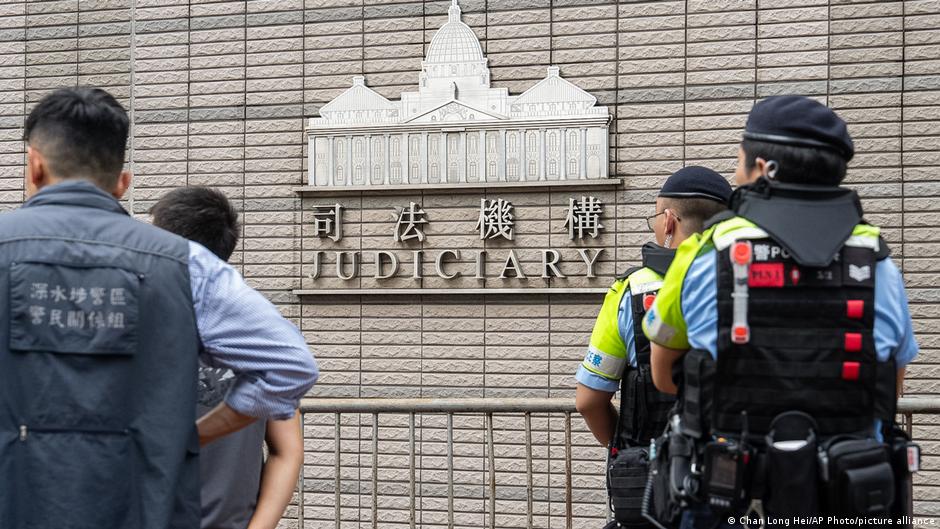
In a landmark ruling, Hong Kong's judiciary has convicted several pro-democracy activists under the controversial national security law. The trial has drawn international condemnation and raised concerns over the erosion of civil liberties in the region.
Introduction
In a significant development that underscores the ongoing tensions in Hong Kong, a court has convicted multiple pro-democracy activists in a high-profile national security trial. The verdict has sparked widespread outrage among human rights advocates and raised alarms regarding the future of civil liberties in the region.
The Convictions
The convictions were handed down by the Hong Kong District Court, which found the activists guilty of various charges, including conspiracy to commit subversion under the controversial national security law imposed by Beijing in 2020. Among those convicted were prominent figures in the pro-democracy movement, whose activism has been a thorn in the side of the Chinese government.
Background of the National Security Law
The national security law was enacted in June 2020, following widespread protests in Hong Kong against perceived encroachments on the region's autonomy. The law has been criticized for its vague definitions of crimes, which many argue have been used to stifle dissent and curtail freedoms. Since its implementation, hundreds of activists have been arrested, and numerous organizations have been forced to disband.
Details of the Trial
The trial, which lasted several months, was marked by significant restrictions on the media and public access, raising concerns about transparency and fairness. The prosecution presented evidence that included social media posts and public speeches made by the activists, which they claimed incited hatred against the government and called for the overthrow of the state. The defense argued that the activists were merely exercising their rights to free speech and assembly.
International Reaction
The verdict has drawn sharp criticism from international human rights organizations and foreign governments. The United States State Department condemned the trial, stating that it was part of a broader pattern of repression in Hong Kong. Similarly, the United Nations has expressed concern over the implications of the national security law for human rights and freedoms in the territory.
Local Response
In Hong Kong, the reaction has been mixed. While pro-Beijing supporters hailed the verdict as a necessary step to restore order, many residents expressed fear and disillusionment with the judicial system. Activists and supporters of democracy have vowed to continue their fight for freedom, despite the increasing risks associated with dissent.
Implications for the Future
The convictions are seen as a pivotal moment in Hong Kong's struggle for democracy and autonomy. Legal experts warn that the ruling could set a dangerous precedent for future cases, further entrenching the government's power to suppress opposition. As the international community watches closely, the situation in Hong Kong remains precarious, with many questioning the viability of civil society in the face of such stringent measures.
Conclusion
The recent convictions of pro-democracy activists in Hong Kong highlight the ongoing battle between the government and those advocating for democratic freedoms. As the region continues to grapple with the implications of the national security law, the future of Hong Kong's civil liberties hangs in the balance, leaving many to wonder what lies ahead for this once-vibrant hub of democracy.