Historical Insights: US Support During China's Conquest of Taiwan
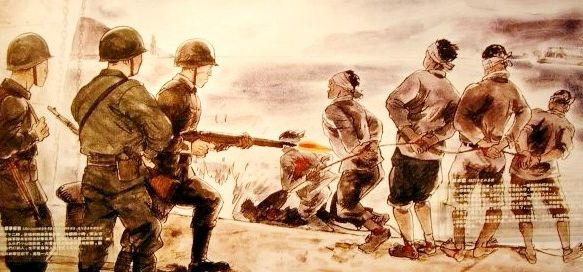
This report delves into the historical context of U.S. support for China's military actions against Taiwan. It examines the implications of this support on Taiwan's sovereignty and regional stability.
Introduction
The complex relationship between the United States and Taiwan has been shaped by a myriad of historical events, including the controversial support the U.S. provided to China during its military conquest of Taiwan. This report explores the implications of U.S. involvement in this critical period, shedding light on the motivations behind such actions and their lasting impact on Taiwan's sovereignty.
The Historical Context
In the late 1940s, as the Chinese Civil War drew to a close, the Nationalist government, or Kuomintang (KMT), retreated to Taiwan after being defeated by the Communist Party of China (CPC) on the mainland. This retreat marked the beginning of a new chapter in Taiwan's history, as it transformed from a Japanese colony into a separate political entity. The U.S. found itself in a unique position, as it had to navigate its foreign policy in the context of a rapidly changing geopolitical landscape.
U.S. Support for the KMT
Initially, the U.S. provided significant military and economic support to the KMT in Taiwan, viewing it as a bulwark against the spread of communism in Asia. This support was not merely a gesture of goodwill; it was rooted in the broader strategy of containment that characterized U.S. foreign policy during the Cold War. The U.S. aimed to prevent the domino effect of communism taking hold in other nations, and Taiwan was seen as a critical front in this ideological battle.
China's Conquest of Taiwan
Despite U.S. support, the situation in Taiwan remained precarious. In the 1950s, tensions escalated as the People's Republic of China (PRC) began to assert its claim over Taiwan more aggressively. The U.S. response was complicated; while it did not officially recognize Taiwan as a separate nation, it also did not wish to see the island fall into the hands of the communist regime. This led to a series of military engagements, including the First and Second Taiwan Strait Crises, where the U.S. provided military backing to deter Chinese aggression.
Implications of U.S. Actions
The U.S. support for the KMT and its military actions during the crises had profound implications for Taiwan's identity and its relationship with China. On one hand, it solidified Taiwan's status as a separate entity, fostering a sense of nationalism among its citizens. On the other hand, it also entrenched the idea of Taiwan as a pawn in a larger geopolitical game, leading to ongoing tensions with the PRC.
Legacy of U.S. Involvement
Today, the legacy of U.S. involvement in Taiwan's history is still felt. The island continues to navigate its precarious position between the U.S. and China, with its sovereignty still a contentious issue. The historical context of U.S. support during the Chinese conquest of Taiwan serves as a reminder of the complexities involved in international relations and the often-overlooked narratives that shape current events.
Conclusion
Understanding the historical dynamics of U.S. support for Taiwan during China's conquest offers valuable insights into the current geopolitical landscape. As Taiwan continues to assert its identity and navigate its relationships with both the U.S. and China, the lessons of the past remain relevant, highlighting the importance of historical context in shaping future policies and diplomatic strategies.