China's Market Drop: A Reflection of AI Optimism and Monetary Tightening Concerns
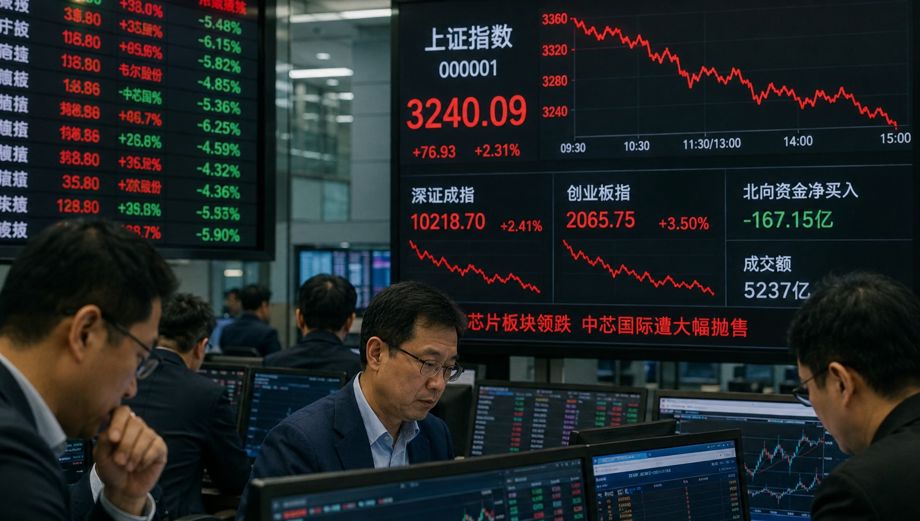
China's stock market has experienced a significant decline, raising concerns among investors about the impact of monetary tightening and the fading excitement surrounding artificial intelligence. This report delves into the factors contributing to this downturn and its implications for the Chinese economy.
Introduction
In recent weeks, China's stock market has faced a notable downturn, prompting analysts and investors to reassess the underlying factors driving this decline. The combination of waning enthusiasm for artificial intelligence (AI) advancements and the looming specter of monetary tightening has created a precarious environment for investors.
AI Optimism Fades
Earlier this year, the Chinese market was buoyed by a wave of optimism surrounding AI technologies, with many investors betting on the potential for substantial growth in this sector. Companies involved in AI development saw their stock prices soar as excitement about innovations and advancements in machine learning and automation reached fever pitch. However, as the initial hype began to fade, the reality of slower-than-expected adoption rates and the challenges of regulatory compliance have dampened investor sentiment.
Monetary Tightening Concerns
Compounding the situation is the growing concern over monetary policy tightening by the People's Bank of China (PBOC). In an effort to control inflation and stabilize the economy, the central bank has hinted at potential interest rate hikes and reduced liquidity in the market. This shift towards a more restrictive monetary policy has raised alarms among investors, leading to a sell-off in stocks as fears of reduced economic growth take hold.
Market Reactions
As a result of these factors, major indices in the Chinese stock market have experienced significant declines. The Shanghai Composite Index, for instance, has seen a drop of over 10% in recent weeks, reflecting the broader market's unease. Investors are now grappling with the dual challenges of navigating a cooling tech sector and the implications of tighter monetary policy.
Sector Analysis
The technology sector, which was previously the darling of investors, has been particularly hard-hit. Companies that had previously enjoyed soaring valuations based on AI prospects are now facing increased scrutiny. Analysts are downgrading their projections, leading to further declines in stock prices. Additionally, sectors reliant on consumer spending are also feeling the pinch as economic uncertainty looms large.
Global Implications
The ripple effects of China's market decline are being felt globally. As one of the largest economies in the world, fluctuations in the Chinese market can impact international trade and investment flows. Investors worldwide are closely monitoring the situation, as a sustained downturn in China could signal broader economic challenges, particularly for countries that have strong trade ties with the nation.
Future Outlook
Looking ahead, analysts remain divided on the future trajectory of China's stock market. While some believe that the current downturn presents a buying opportunity, others caution that the combination of fading AI enthusiasm and tightening monetary policy could lead to further declines. The PBOC's next moves will be critical in shaping investor sentiment and determining the market's direction.
Conclusion
In conclusion, China's recent market drop serves as a stark reminder of the complexities of the global economy. The interplay between technological optimism and monetary policy is a delicate balance that investors must navigate. As the situation unfolds, stakeholders will be keenly watching for signals from the PBOC and the broader economic landscape to gauge the future of China's markets.