China Launches Shenzhou 23 Spacecraft with Astronauts for Yearlong Mission
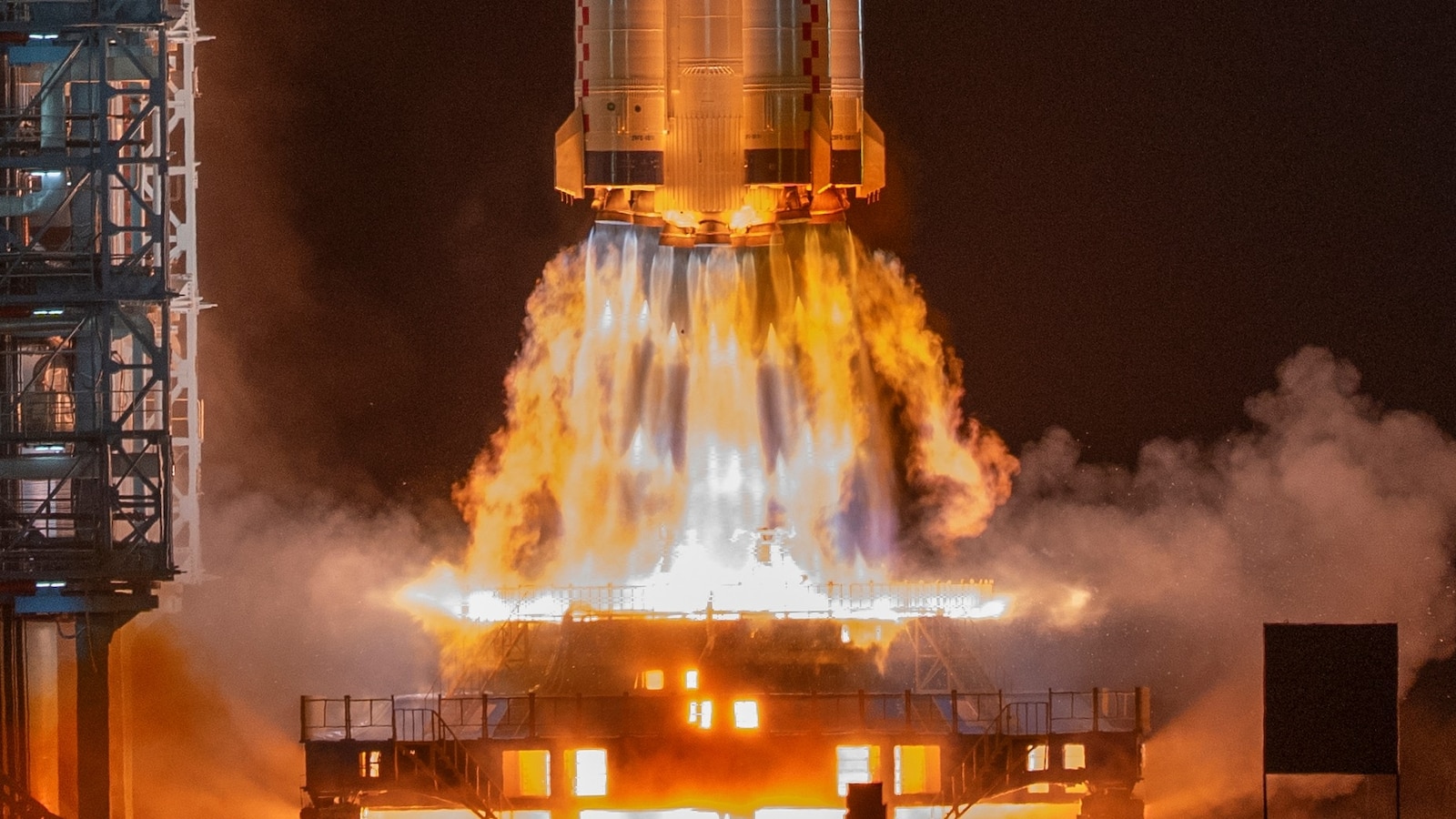
China has successfully launched the Shenzhou 23 spacecraft, marking a significant milestone in its space exploration efforts. One of the three astronauts aboard is set to spend an entire year in orbit, contributing to long-term space habitation research.
China's Ambitious Space Mission
In a remarkable display of technological advancement and ambition, China has launched its Shenzhou 23 spacecraft carrying three astronauts, including one who is set to embark on a yearlong stay in space. This mission is part of China's ongoing efforts to establish a permanent human presence in low Earth orbit and enhance its capabilities in space exploration.
Launch Details
The Shenzhou 23 spacecraft was launched from the Jiuquan Satellite Launch Center in the Gobi Desert on October 15, 2023. The mission is a pivotal component of China's Tiangong space station program, which aims to create a fully operational space station by the mid-2020s. The astronauts aboard the Shenzhou 23 are Wang Yaping, the first woman to walk in space for China; Zhai Zhigang, a veteran astronaut; and the newcomer, Ye Guangfu, who will be the first Chinese astronaut to spend an entire year in orbit.
A Yearlong Stay in Space
Ye Guangfu's yearlong mission is particularly significant as it will provide valuable data on the effects of long-duration spaceflight on the human body. This research is crucial for future missions to the Moon and Mars, where astronauts may be required to stay in space for extended periods. The mission will involve a series of scientific experiments and technological tests aimed at improving life support systems and understanding the psychological and physiological challenges of long-term space habitation.
Scientific Endeavors and International Collaboration
During their time aboard the Tiangong space station, the astronauts will conduct over 20 scientific experiments, ranging from materials science to biological studies. The mission underscores China's commitment to advancing its scientific capabilities and contributing to global knowledge in space research. Furthermore, China has expressed interest in collaborating with international space agencies, opening the door for potential partnerships in future missions.
Public and Global Reactions
The launch has garnered significant attention both domestically and internationally. In China, the mission is being celebrated as a testament to the country's growing prowess in space technology. State media have hailed the astronauts as national heroes, and the public is eagerly following their journey. Internationally, experts are watching closely, recognizing that China's advancements in space exploration could reshape the dynamics of global space exploration and cooperation.
Challenges Ahead
While the mission is a monumental achievement, it also comes with challenges. The long-term effects of microgravity on the human body are still not fully understood, and the astronauts will need to navigate the psychological stresses of isolation and confinement. Additionally, the technical challenges of maintaining life support systems for an extended period will be rigorously tested.
Looking to the Future
As the Shenzhou 23 mission unfolds, it represents not just a leap for China, but a significant step for humanity's exploration of space. The knowledge gained from this mission will contribute to the future of space travel and the potential for human colonization of other planets. With plans for more ambitious missions on the horizon, China is firmly positioning itself as a key player in the next era of space exploration.