Apple Suppliers Accelerate Investment in Robotics Amid Hong Kong's Economic Landscape
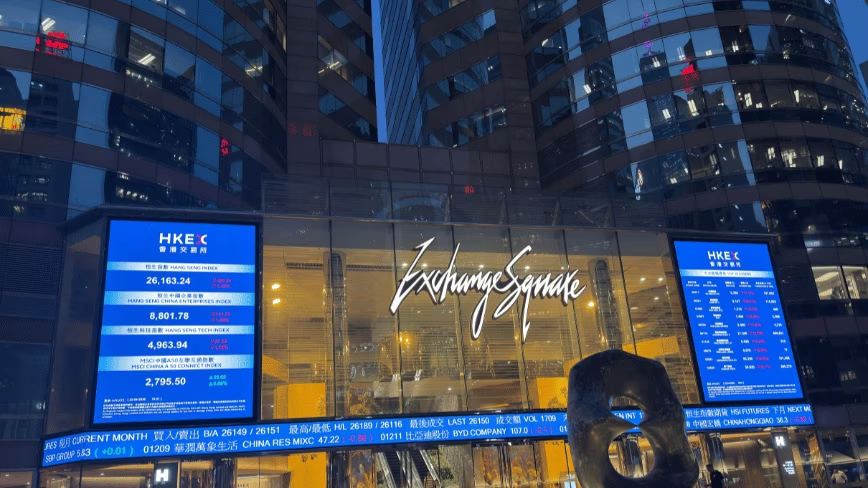
Apple's suppliers are increasingly turning to Hong Kong to fund their transition to robotics, reflecting a significant shift in manufacturing strategies. This pivot aims to enhance efficiency and reduce reliance on human labor in the face of rising costs and technological advancements.
Introduction
As the global technology landscape evolves, Apple’s suppliers are making a strategic move towards robotics, with many flocking to Hong Kong to secure funding and support for this transition. This shift is not only indicative of the changing dynamics in manufacturing but also highlights the unique economic environment of Hong Kong as a hub for innovation and investment.
The Shift Towards Robotics
In recent years, the manufacturing sector has faced numerous challenges, including rising labor costs, supply chain disruptions, and the need for increased efficiency. As a result, many suppliers are now looking to automate their processes, with robotics playing a pivotal role in this transformation. By integrating robotic technology, companies can streamline operations, reduce costs, and improve product quality, making them more competitive in the global market.
Hong Kong as an Investment Hub
Hong Kong has emerged as a key destination for Apple’s suppliers seeking to fund their robotic initiatives. The region's favorable business environment, coupled with its strategic location in Asia, makes it an attractive option for companies looking to innovate. Furthermore, Hong Kong's robust financial ecosystem provides access to capital and investment opportunities that are crucial for funding advanced technological projects.
Government Support and Incentives
The Hong Kong government has recognized the importance of technology and innovation in driving economic growth. To support this transition, various initiatives and incentives have been introduced to encourage businesses to adopt advanced manufacturing technologies. These include grants, tax incentives, and support for research and development, all aimed at fostering a more technologically advanced manufacturing sector.
Challenges Ahead
While the pivot to robotics presents numerous opportunities, it is not without its challenges. Suppliers must navigate the complexities of integrating new technologies into existing systems, which can require significant investment and expertise. Additionally, there are concerns about the potential impact on employment, as automation may lead to job displacement in certain sectors.
The Future of Manufacturing in Hong Kong
As Apple’s suppliers continue to invest in robotics, the future of manufacturing in Hong Kong looks promising. The combination of technological advancement and a supportive business environment positions the region as a leader in the global manufacturing landscape. Moreover, this shift could pave the way for new job opportunities in tech-related fields, as the demand for skilled workers in robotics and automation rises.
Conclusion
In conclusion, the race among Apple’s suppliers to secure funding for their robotic pivots in Hong Kong signifies a transformative moment in the manufacturing industry. As companies embrace automation to enhance efficiency and competitiveness, Hong Kong stands out as a vital player in this evolution. The region's commitment to fostering innovation and supporting technological advancements will be crucial in shaping the future of manufacturing, not just for Apple but for the entire global market.